
The Structural Technique is a holistic, non-invasive therapy that helps restore the physical balance of the body and nervous system. It also helps to locate emotional charges and release them in the most appropriate order.

When we have fatigue, discouragement or physical pain, we generally find imbalances in the spine. These imbalances generate poor functioning of the nerves that can cause pain, discomfort or the malfunction of any organ. We consider that these imbalances come from an emotional conflict, whether conscious, non-conscious or from the environment, as well as emotional blockages of various kinds.

This method is compatible with any psychological, medical or pharmacological treatment.
On numerous occasions, ailments such as pain or discomfort appear that can become recurrent. It is common for many of these painful conditions to coincide with imbalances in the spine, leading to lumbago, sciatica, back pain, generalized fatigue, low spirits, headaches, vertigo, migraines, and even fibromyalgia, sometimes resulting in the poor functioning of any limb, organ, or gland.
Misalignments in the position of the vertebrae that form the spinal column constitute deviations that can generate inadequate functioning of the nerves running along the spine, often causing pain or discomfort in any part of the body.
On a physical level, the therapist helps to restore the body's physical balance and the proper functioning of the nervous system. In Structural Technique, it is also considered that the origin of most physical ailments comes from an emotional conflict in which the individual's conscious and unconscious state and the surrounding environment can intervene, including various emotional blockages such as inherited issues, family patterns, different phobias and compulsions, various types of traumas, unresolved grief, etc., whether we are aware of them or not. Over the years, these become a burden that ends up affecting the individual both physically and emotionally.
On an emotional level, the therapist helps to locate the different emotional burdens and release them in the most appropriate order in a non-invasive way. Furthermore, the Structural Technique is compatible with any psychological, medical, or pharmacological treatment.
In the early 1980s, a family with members who had severe cases of migraines and foot problems, after visiting different specialists without finding a solution, decided to turn to folk healers (curanderos).
After some time, they found Marcel·lí Roca (1923-2005), who told them that, using only his hands and within a month, he could resolve those problems, and he did.
One of the members of that family, Jaume Puig, became very interested in learning that simple and effective method and offered himself to Marcel·lí as an apprentice. Marcel·lí welcomed him and passed on his knowledge. Historically, it has always been considered that folk healers could learn their craft through oral transmission or innately, as in Marcel·lí's case, although in both cases, they were considered to have a special gift. Jaume Puig began to work with this knowledge and gave it structure by developing the Structural Technique and creating a consolidated teaching system. Today, the Structural Technique is practiced in different countries worldwide and in various languages.
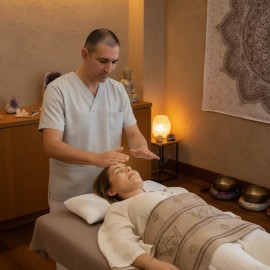
Structural Technique sessions can be carried out both in-person and remotely. In in-person sessions, the person lies on a couch, while the facilitator checks for different energetic misalignments in the client's body, and then energetically removes any existing blockages. The duration of the technique is between 15 and 45 minutes. In remote sessions, the facilitator checks the person's body from a distance and then removes any existing blockages.
The duration of the in-clinic technique ranges between 15 and 45 minutes, depending on the person's condition. The initial treatment always consists of four sessions, although this may occasionally vary. At the beginning of the session, the person lies on the couch, and the therapist checks for possible imbalances in the limbs, the rest of the body, and specifically the back, to then correct these imbalances without making direct manipulations to the vertebrae, and to look for emotional imbalances to unblock them and restore the person's balance.
The duration of the remote (Online) technique ranges between 15 and 45 minutes, depending on the person's condition. The initial treatment always consists of four sessions, although this may occasionally vary. During the Online, remote session, the person can be doing whatever task they wish, as the facilitator proceeds to carry out a defined Structural Technique protocol to achieve the desired results.
Specific References
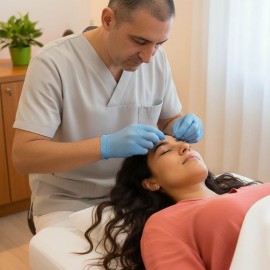
The Emotional Freedom Technique or EFT Tapping is an acupuncture technique without needles, which thanks to the stimulation of certain points of the energy meridians that run through our body, enables the release of stagnant energy and facilitates that said energy flow to rebalance our body. The effectiveness of EFT was recognized in 1979 by the World Health Organization (WHO)
This technique is indicated to rebalance our body in any type of emotional discomfort, and is very effective in cases of anxiety, stress, fears, phobias, emotional pain, anger, guilt and addictions in General.
As it is a acupressure technique, it is completely painless.
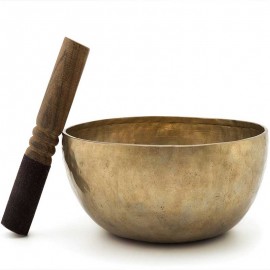
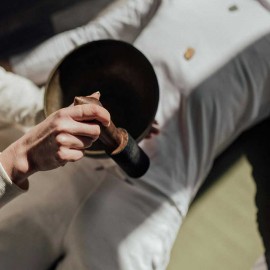
Vibrational texchnque with Tibetan bowls is a healing practice that uses the sound and vibration of these metal instruments, sound therapy, to promote physical, mental, and emotional well-being. When played or vibrated on or near the body, the acoustic waves generate resonances that encourage deep relaxation, reduce stress, and balance energy. These frequencies stimulate self-regeneration, harmonize the chakras, and enhance the mind-body connection, facilitating states of calm and meditation.
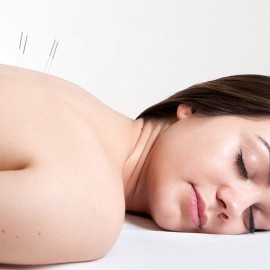
Acupuncture is an ancient, painless and safe practice that aims to rebalance the energy of the body by manipulating different points of the body. In this healing technique used in traditional Chinese medicine, very thin needles are used to stimulate specific points in the body. Most of these points are placed on lines called "meridians".
In Acupuncture the disease is not defined by symptoms or by the name of a disease, but by energy imbalances, using terms such as Yin insufficiency or excess heat in the lungs.
The Chinese terms YIN and YANG refer to opposite energies that complement each other, and the term QI or CHI refers to vital energy.
Hijama is a traditional technique that goes back thousands of years, used to maintain health through the application of suction cups, finding writings that demonstrate this in the Chinese and Egyptian civilizations. This therapy is also widespread in Muslim countries as a therapeutic treatment.
The basis of Hijama is prevention and its use is one of the most widespread therapies in the world to maintain health, acting together with a balanced diet and a healthy lifestyle, so the hijama, together with a good diet and healthy exercise contribute to prevent diseases.
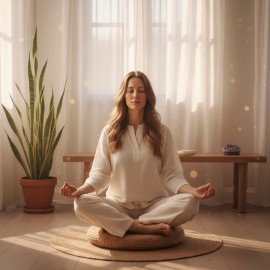
Through personalized sessions and simple practices, you will learn conscious breathing techniques that will help you reduce stress, improve emotional well-being, increase energy, and enhance mental clarity every day. This program is accessible for all ages and levels, adapting to your personal and professional needs, and provides you with effective tools to balance your health, emotions, and performance in all areas of life.
Mindfulness meditation service designed to help you cultivate full attention, reduce stress, and improve your overall well-being. Through guided individual sessions and tailored practices, you will learn to live with greater presence, manage emotions, and enhance your mental clarity and productivity. Ideal for busy people seeking balance and sustainable performance. Integrate this practice into your daily life and transform your quality of life with simple and effective tools. We accompany you on this path toward a clearer and calmer mind.
Foot reflexology is based on the stimulation of the foot to achieve a beneficial and relaxing effect on the rest of the body.
Thanks to foot reflexology massage, beneficial effects can be obtained in numerous conditions such as rheumatic pain, stress, depression, anxiety, contractures, etc. obtaining a pleasant feeling of well-being after the session.
Reflexotherapy can be performed without creams or oils, or if preferred, with specific hypoallergenic creams or top quality oils, rich in antioxidants and easily absorbed to improve the elasticity and smoothness of the skin.
Reiki is a holistic, completely painless healing technique that channels universal energy to promote physical, mental, and emotional balance and well-being. Its many benefits include stress reduction, deep relaxation, pain relief, or strengthening the immune system.
We offer Reiki sessions both in office and at home or remotely.
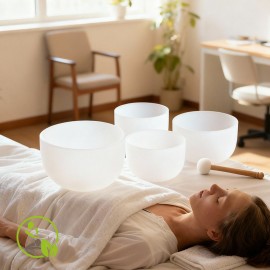
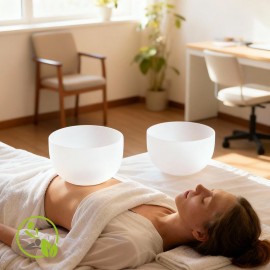
Immerse yourself in the magic of the crystal singing bowl massage, a therapeutic experience that uses the pure vibrations of quartz to balance body, mind, and energy.
Each sound frequency penetrates your cells, releasing blockages, reducing stress, and creating a deep sense of calm and inner well-being.
Perfect for those seeking relaxation, better rest, and reconnection with their inner peace. Allow yourself to feel the harmony of sound, restore your natural balance, and raise your vibration.
Book your crystal singing bowl massage session now and discover how the power of sound can transform your energy from within.
Acupuncture is an ancient, painless and safe practice that aims to rebalance the energy of the body by manipulating different points of the body. In this healing technique used in traditional Chinese medicine, very thin needles are used to stimulate specific points in the body. Most of these points are placed on lines called "meridians".
In Acupuncture the disease is not defined by symptoms or by the name of a disease, but by energy imbalances, using terms such as Yin insufficiency or excess heat in the lungs.
The Chinese terms YIN and YANG refer to opposite energies that complement each other, and the term QI or CHI refers to vital energy.
Foot reflexology is based on the stimulation of the foot to achieve a beneficial and relaxing effect on the rest of the body.
Thanks to foot reflexology massage, beneficial effects can be obtained in numerous conditions such as rheumatic pain, stress, depression, anxiety, contractures, etc. obtaining a pleasant feeling of well-being after the session.
Reflexotherapy can be performed without creams or oils, or if preferred, with specific hypoallergenic creams or top quality oils, rich in antioxidants and easily absorbed to improve the elasticity and smoothness of the skin.
The Emotional Freedom Technique or EFT Tapping is an acupuncture technique without needles, which thanks to the stimulation of certain points of the energy meridians that run through our body, enables the release of stagnant energy and facilitates that said energy flow to rebalance our body. The effectiveness of EFT was recognized in 1979 by the World Health Organization (WHO)
This technique is indicated to rebalance our body in any type of emotional discomfort, and is very effective in cases of anxiety, stress, fears, phobias, emotional pain, anger, guilt and addictions in General.
As it is a acupressure technique, it is completely painless.
The Structural Technique is a holistic, non-invasive therapy that helps restore the physical balance of the body and nervous system. It also helps to locate emotional charges and release them in the most appropriate order.

When we have fatigue, discouragement or physical pain, we generally find imbalances in the spine. These imbalances generate poor functioning of the nerves that can cause pain, discomfort or the malfunction of any organ. We consider that these imbalances come from an emotional conflict, whether conscious, non-conscious or from the environment, as well as emotional blockages of various kinds.

This method is compatible with any psychological, medical or pharmacological treatment.